Gas Ranges
GR-series, sealed dual-stacked burners over a gas cavity.
Wolf Ranges
A range is really two appliances: burners on top, an oven below. They fail for different reasons, so we test them separately, name the price for the part that actually failed, and start only when you say go.
Coverage
Gas, dual fuel and induction, 30 through 60 inches, with every burner module Wolf builds. A model that is not on this list is still worth a call — the fault behind it is usually one we see weekly.
GR-series, sealed dual-stacked burners over a gas cavity.
DF-series, gas on top and an electric convection cavity underneath.
SRT and ICBSRT — the cooking surface alone, no cavity beneath it.
Induction surfaces, with their own power modules, sensors and boards.
Wide bodies carrying two cavities, each with its own controls and elements.
Infrared charbroilers, French tops and griddles built into the surface.
Units long out of warranty, where parts get sourced rather than pulled off the van.
What We Fix
Name the one that sounds like yours when you call. On a range the symptom almost always tells us which half is at fault before a panel comes off, and that is what makes a firm quote possible over the phone.
On an all-gas cavity the igniter weakens until it no longer pulls the safety valve open. On dual fuel the suspects are the bake element and the relay that feeds it. Both are visible on a meter in minutes.
Spark is arriving and gas is not, or the spark is jumping somewhere it should not. Nine times out of ten it is the valve switch, the electrode, or a burner cap seated a millimetre out of true.
Nothing is confirming to the valve that a flame exists, so it closes on purpose. That is the thermocouple, or the switch behind that one knob — a safety device doing its job.
The cavity heats, just not to the number you dialled. Three usual causes: a drifted temperature sensor, a control board that has lost calibration, or a door gasket that stopped sealing a season ago.
Broil igniter, broil element, or the relay behind them. Uneven browning across a sheet pan is the clearest tell there is that one half of the circuit has gone.
The lock motor and its switch are what stalled. A cavity that stays latched after self-clean is a lock assembly job — please do not pry the door, that turns a part into a panel.
Control board, display module, or the supply behind the unit. Write the code down before you call: it often takes an hour of diagnostics down to ten minutes.
Grinding and rattling mean a worn motor bearing. A fan that never turns is the motor, its relay, or the board commanding it. Either way convection baking is the first thing you notice.
Tell us what it does and when it does it. Most of these we can name on the phone in a couple of minutes.
Recent Repairs
Real ranges, real faults, real parts on the invoice. Every one of them started as a phone call that sounded a lot like yours.
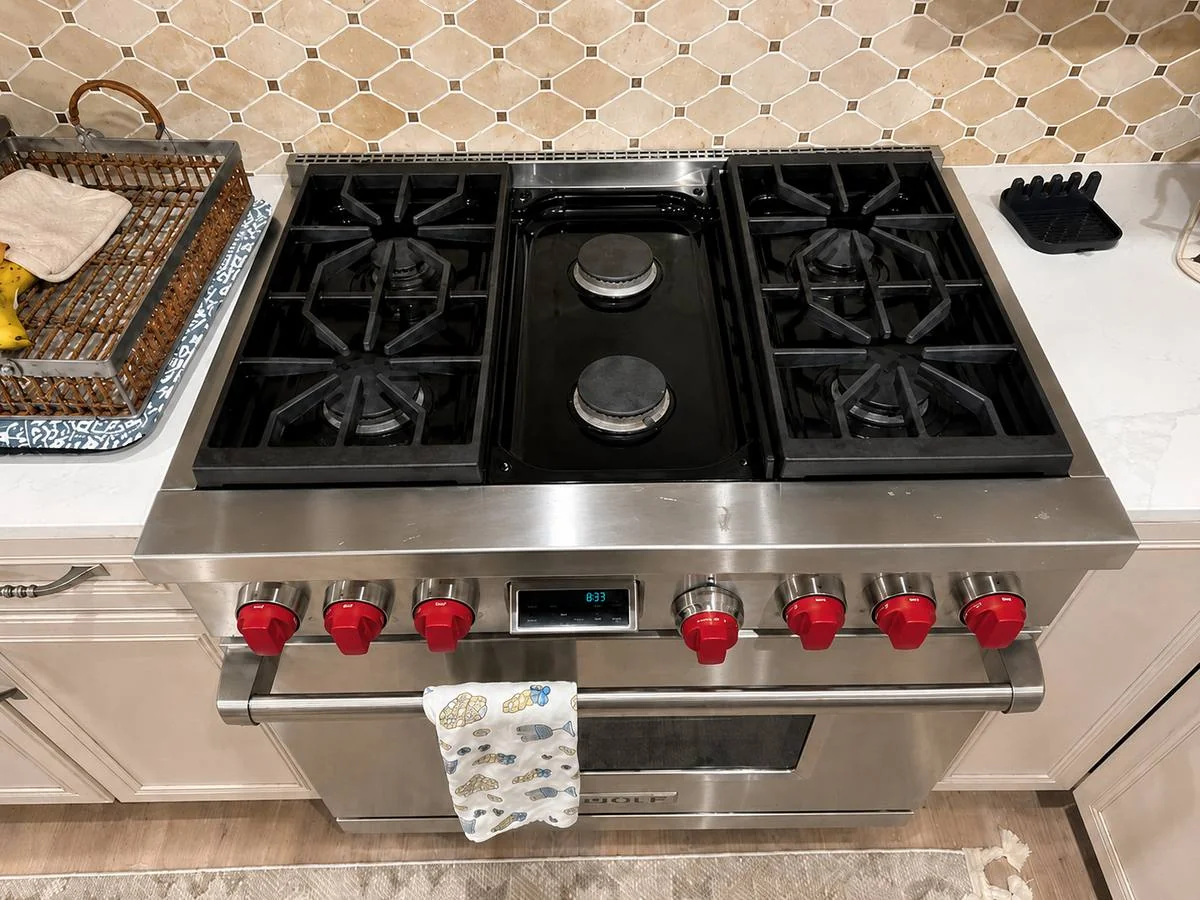
A Wolf gas range that keeps clicking or won't light usually comes down to failed igniters, spark modules, damaged ignition wires or burner contamination. After the repair the affected burners ignited normally, the spark shut off on its own, and the clicking was gone.
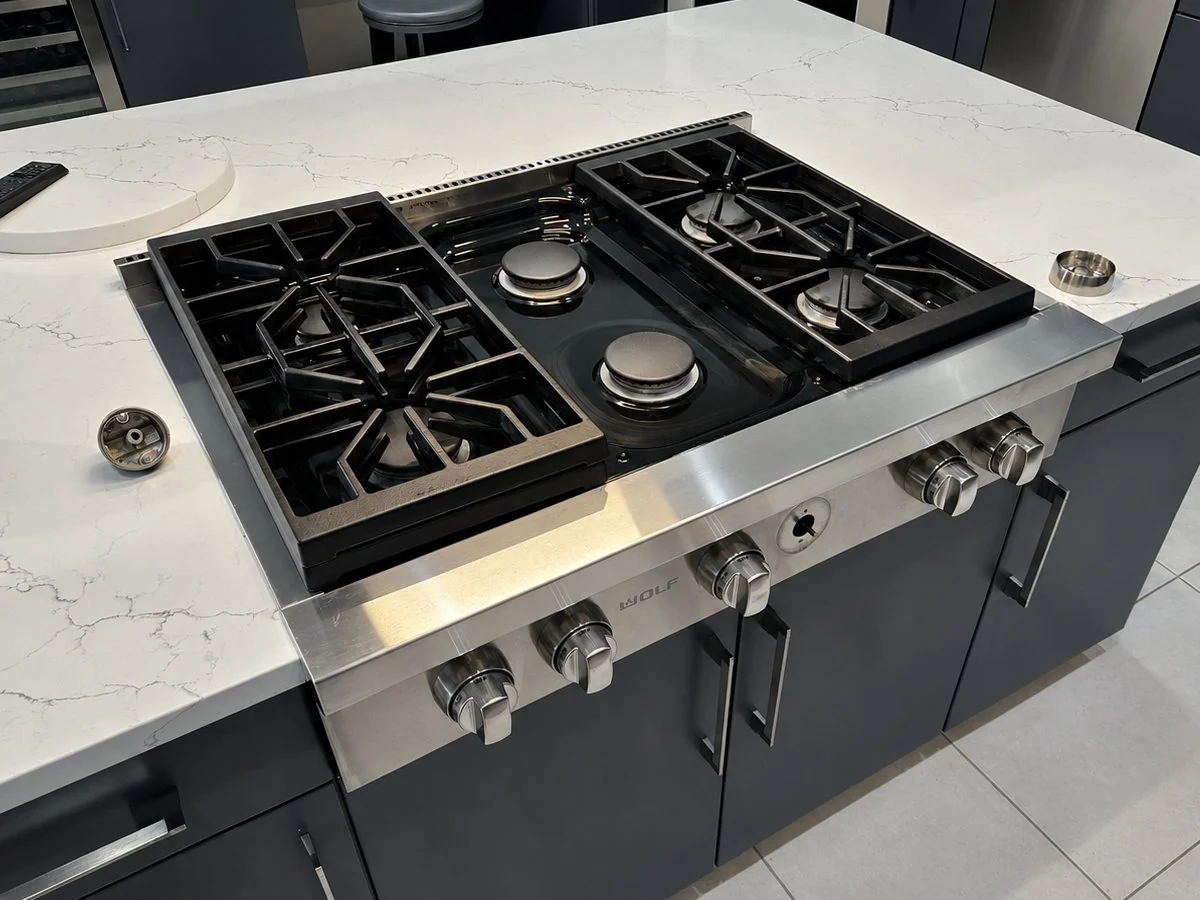
Clicking that carries on after ignition points at the spark module, the igniter, an ignition switch, wiring, or moisture around the burner. Once the defective parts were replaced, the burners lit and the clicking stopped the moment the flame took.
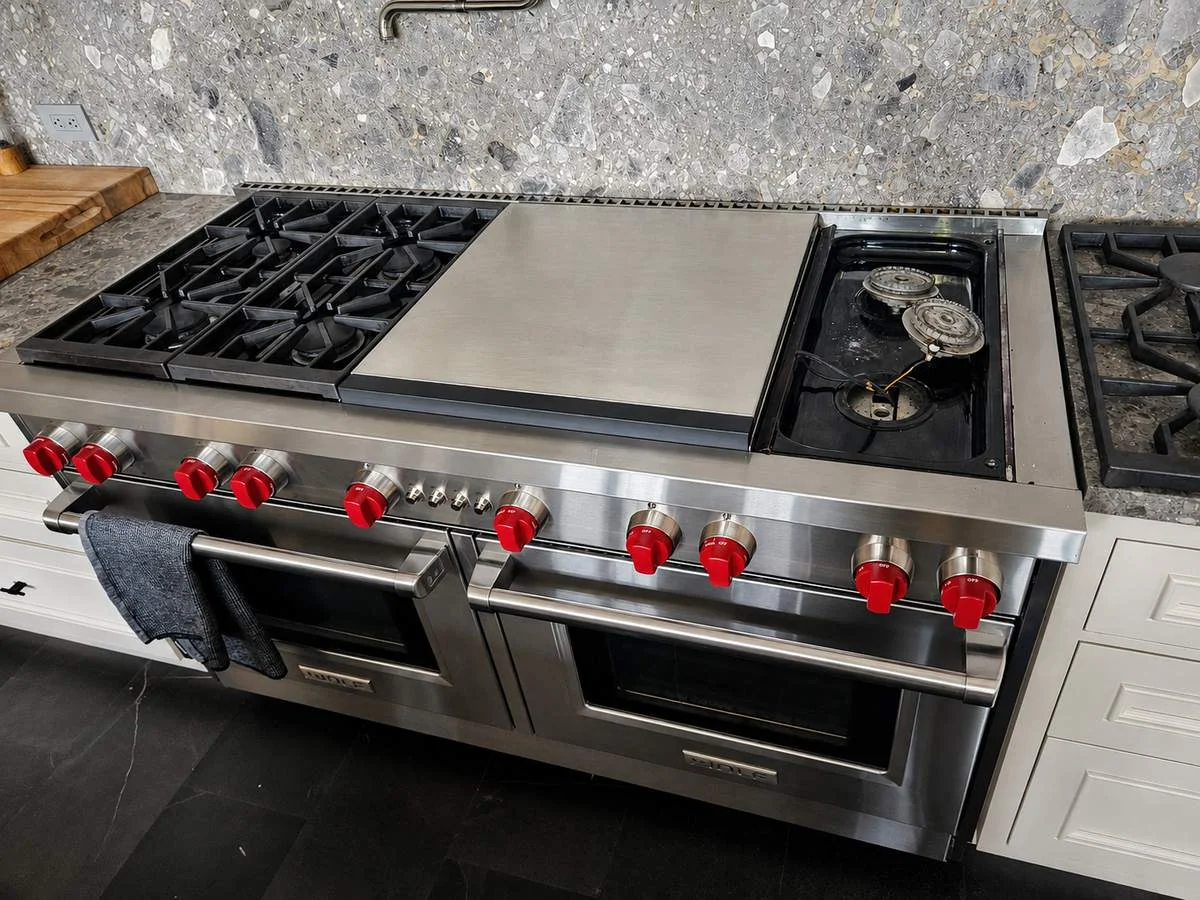
A rangetop that clicks, fails to ignite or burns unevenly can be the igniter, the spark module, the burner components, the wiring or the gas supply. Testing burner by burner is what separates the one that's actually faulty from the three that aren't.
Book It
Tell us the symptom on the phone — cavity not heating, burners clicking, a code on the display — or leave your number and a dispatcher calls back with a time window.
Pricing
Nothing begins until you have approved a firm number. No hidden fees, no surprises on the invoice.
Other Appliances
Questions
Service Areas
We reach Wolf ranges across these metro areas, with same-day appointments in most of them for calls that come in before noon.
Not on the list? Call (404) 341-4201 and we’ll tell you straight whether we reach you.