Built-In Side-by-Side
600-series combinations with the freezer down one side.
Sub-Zero Freezers
A freezer that has drifted a few degrees looks perfectly normal from the outside, and the food is what tells you first. We check airflow, defrost and the sealed system before quoting a single part.
Coverage
Side-by-side built-ins, tall all-freezer columns, drawers and panel-ready installations. A model that is not on this list is still worth a call — the fault matters more than the badge.
600-series combinations with the freezer down one side.
700-series columns, upper compartment over lower drawers.
Hidden behind cabinet panels, where reaching them is half the job.
24-inch drawers built into islands and butler’s pantries.
Compartments carrying an ice maker, water line and drain.
Models where each half runs its own sealed system.
Units long out of warranty, where parts get sourced rather than pulled off the van.
What We Fix
Name the one that sounds like yours when you call. On a freezer the symptom usually says whether it is airflow, defrost or the sealed system before anyone reaches your address.
Cold but not cold enough is a different fault from dead. The evaporator, its fan, a sensor reading a few degrees off, or a sealed system quietly losing capacity.
The unit noticed something before you did. Write the code down before you call: it usually takes an hour of diagnostics down to ten minutes.
The classic defrost fault. The heater, thermostat or control stopped clearing the evaporator, and the ice slowly closes off the airflow that keeps the compartment cold.
The freezer is fighting something: a condenser packed with dust, a door that stopped sealing, or refrigerant no longer where it belongs.
A blocked drain line. Meltwater from every defrost cycle has nowhere to go, so it either freezes into a slab under the drawers or finds its way out of the door.
An ice maker that stops when the compartment warms is a symptom, not the fault. Temperature first — see the ice maker page.
Evaporator or condenser fan bearings, a blade catching ice, or a compressor clicking on and off because it cannot start.
Hinge alignment, or a gasket that has gone hard. Warm air leaking in is what makes a perfectly healthy freezer run non-stop and frost over anyway.
Tell us what it does and when it does it. Most of these we can name on the phone in a couple of minutes.
Recent Repairs
Real freezers, real faults, real parts on the invoice. Every one of them started as a phone call that sounded a lot like yours.
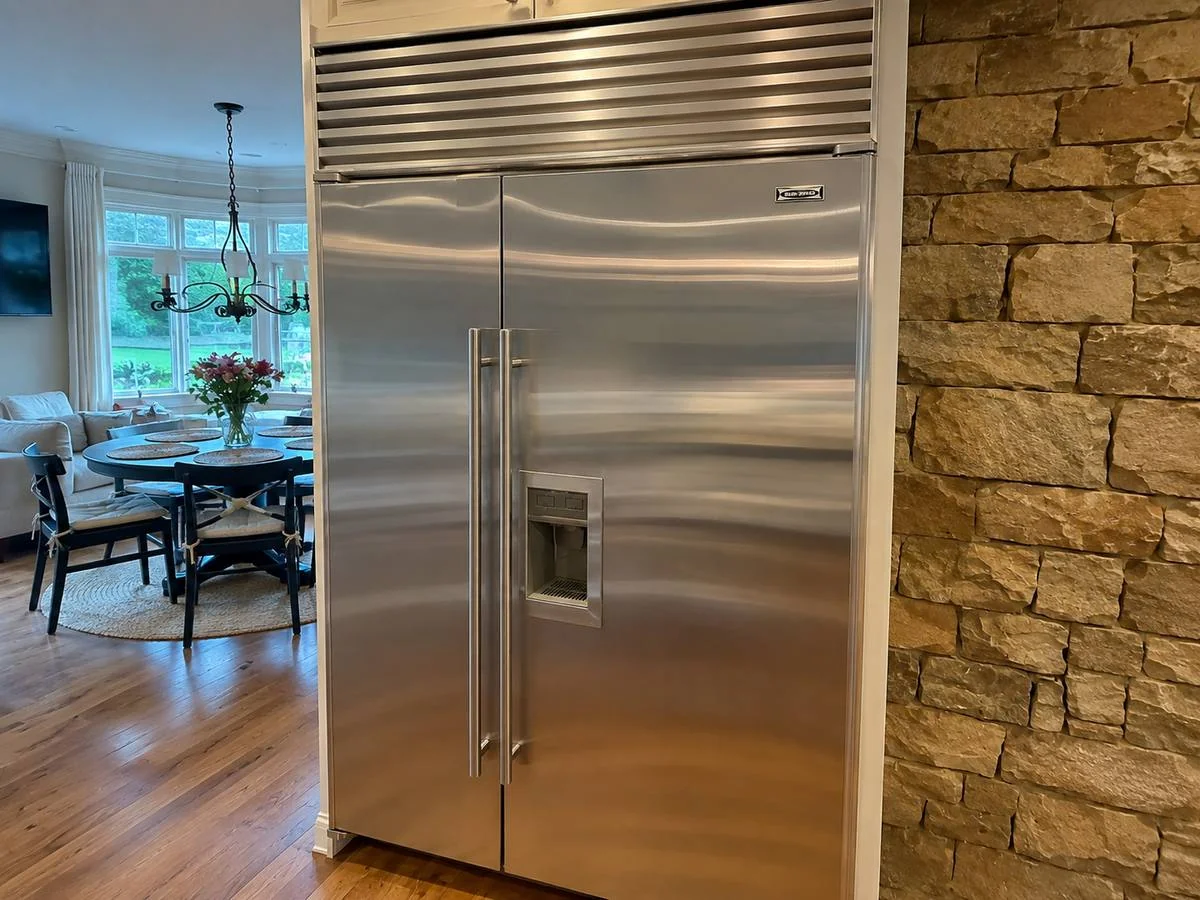
On a side-by-side one half can fall behind while the other looks perfectly normal, and that split does half the work for us: the supply is ruled out, and what is left is that compartment’s airflow, fan or evaporator.
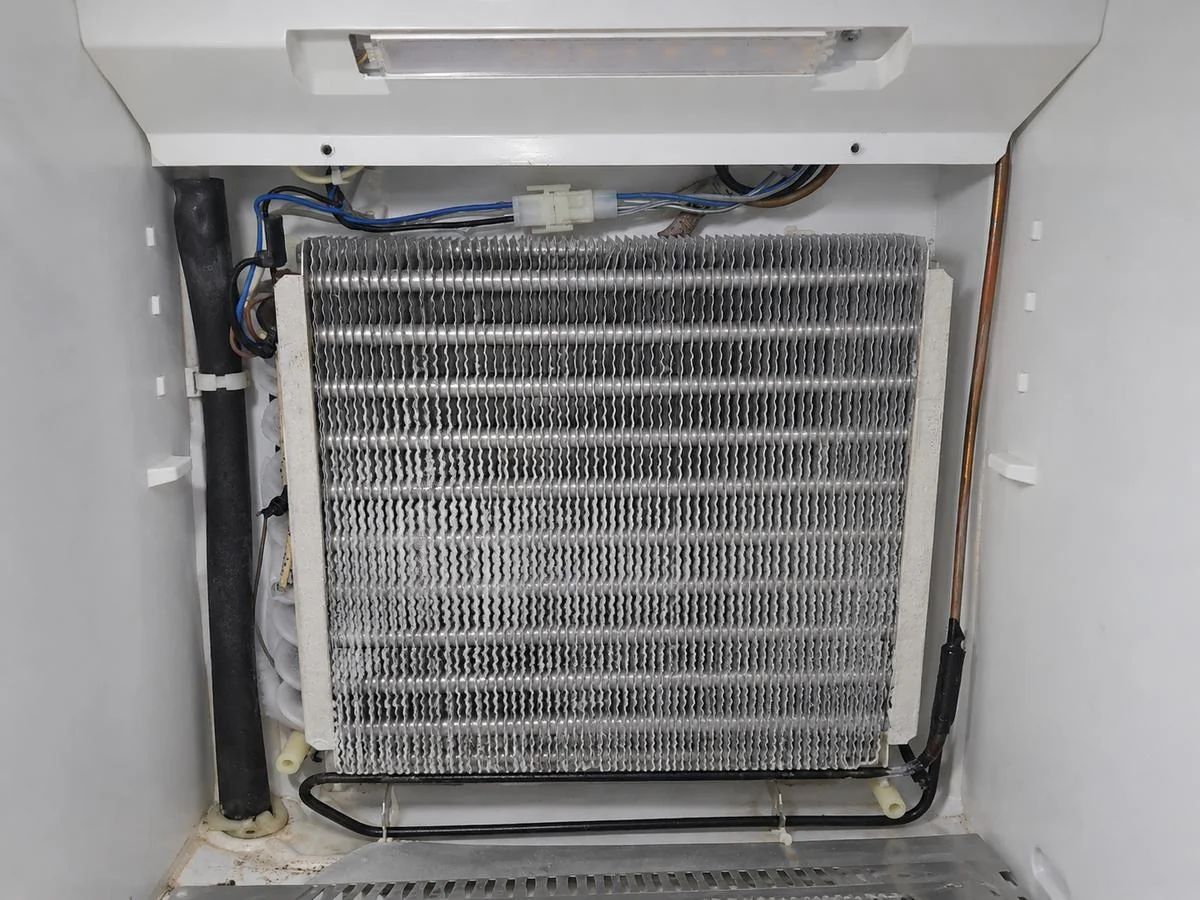
That is the evaporator behind the rear panel — the part that actually makes the cold. When a freezer stops freezing the answer is usually right there: iced over, a fan no longer moving air across it, or a defrost circuit that quit.
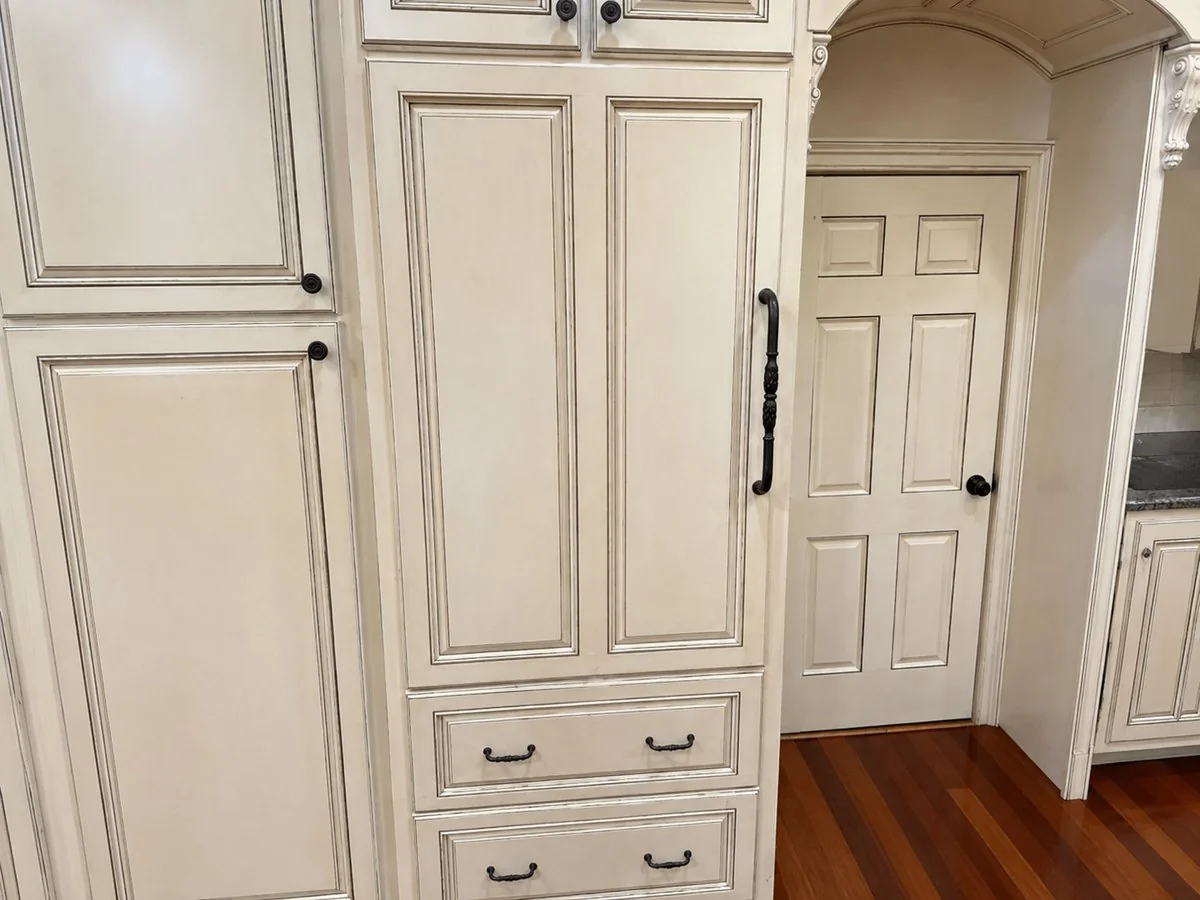
Behind that cabinet panel stands a full-height freezer column. Panel-ready installations hide the appliance completely, so half the job is reaching it without marking the joinery — and the service code is what says it is worth opening at all.
Book It
Tell us the symptom on the phone — not freezing, frost on the back wall, a service light — or leave your number and a dispatcher calls back with a time window.
Pricing
Nothing begins until you have approved a firm number. No hidden fees, no surprises on the invoice.
Other Appliances
Questions
Service Areas
We reach Sub-Zero freezers across these metro areas, with same-day appointments in most of them for calls that come in before noon.
Not on the list? Call (404) 341-4201 and we’ll tell you straight whether we reach you.