Built-In Microwave Ovens
MD and MDD-series set into cabinetry, 24 and 30 inches.
Wolf Microwaves
A built-in microwave is half cabinetry: a door that stops closing squarely takes the whole unit out of service. We separate the door, the controls and the high-voltage side before naming a price for any of them.
Coverage
Built-ins, drawers, convection models and units stacked into oven columns. A model that is not on this list is still worth a call — the fault matters more than the badge.
MD and MDD-series set into cabinetry, 24 and 30 inches.
Pull-out units built into islands and base cabinets.
Combination cavities running microwave and convection together.
Units stacked above or below a wall oven in one tall cabinet.
Framed in with a trim kit, where we plan the access before opening anything.
Both trim families, with their own door hardware and control panels.
Units long out of warranty, where parts get sourced rather than pulled off the van.
What We Fix
Name the one that sounds like yours when you call. On a microwave the symptom usually says whether it is the door, the controls or the high-voltage side before anyone reaches your address.
Light, fan and timer all behave, and nothing gets warm. The magnetron, the high-voltage side, or a door switch that never tells the unit it is safe to fire.
Worn hinges, a damaged latch, or mounting hardware that has crept. On a built-in the cabinet carries part of the load, so alignment drifts over the years.
Usually thermal protection doing its job: a cooling fan that has slowed, a blocked vent, or a sensor ending the cycle early to keep the unit safe.
Control board, display module, or the supply feeding the unit. Write the code down before you call: it often halves the time we spend finding the fault.
Some buttons answer and others do not, or the panel works cold and quits once it warms up. Membrane or control board — and the two behave differently under a meter.
Drive motor, coupler, or the roller ring underneath it. Food heating on one side while everything else looks normal almost always starts here.
The cooling fan, the turntable drive, or a magnetron working under strain. A unit that got noticeably louder is worth looking at before it stops altogether.
Heat from an item left running reaches the door switches and the wiring behind the cavity, not only the walls. Worth an inspection even if the unit still switches on.
Tell us what it does and when it does it. Most of these we can name on the phone in a couple of minutes.
Recent Repairs
Real microwaves, real faults, real parts on the invoice. Every one of them started as a phone call that sounded a lot like yours.
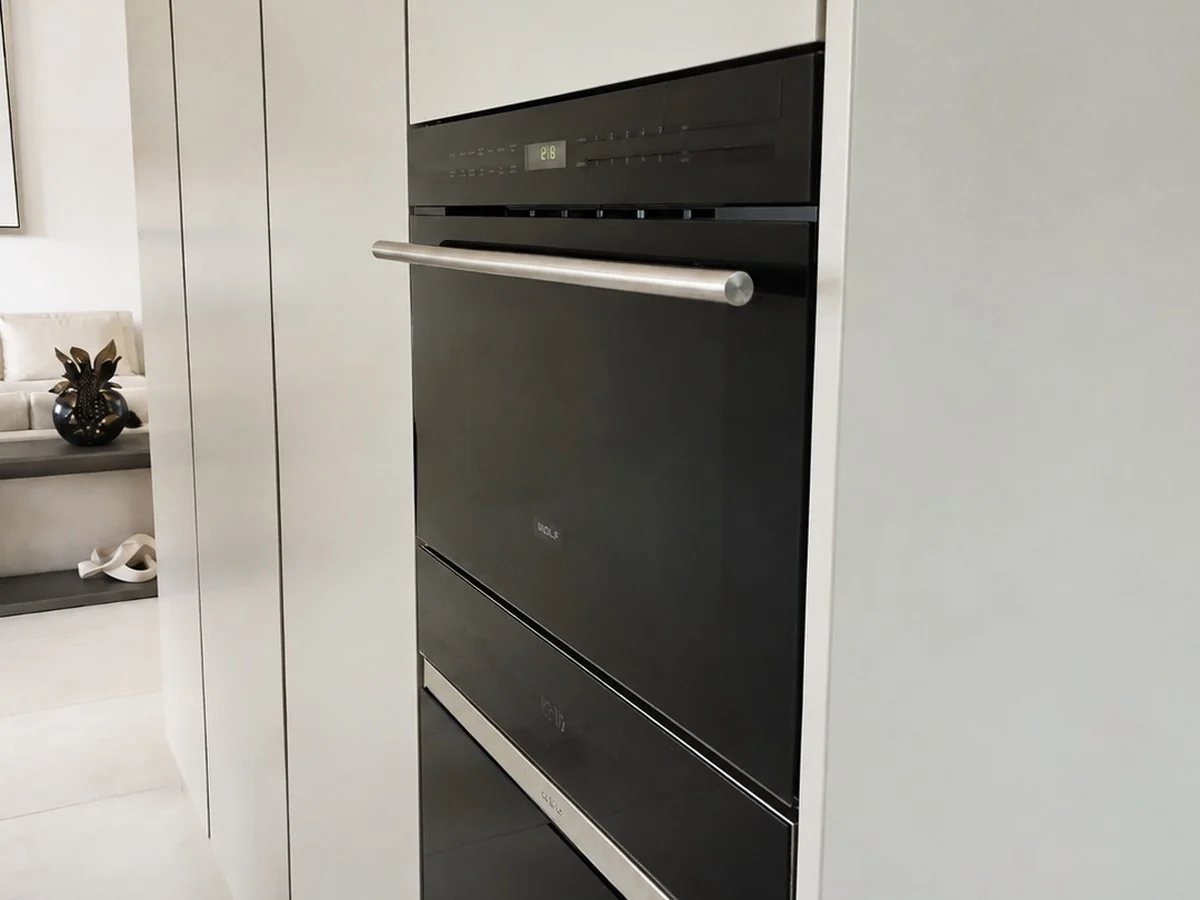
The door is not a lid. Behind it sit the interlock switches that decide whether the unit runs at all, and a door you have to push or lift is already working them wrong. Fix it before they stop registering it as closed.
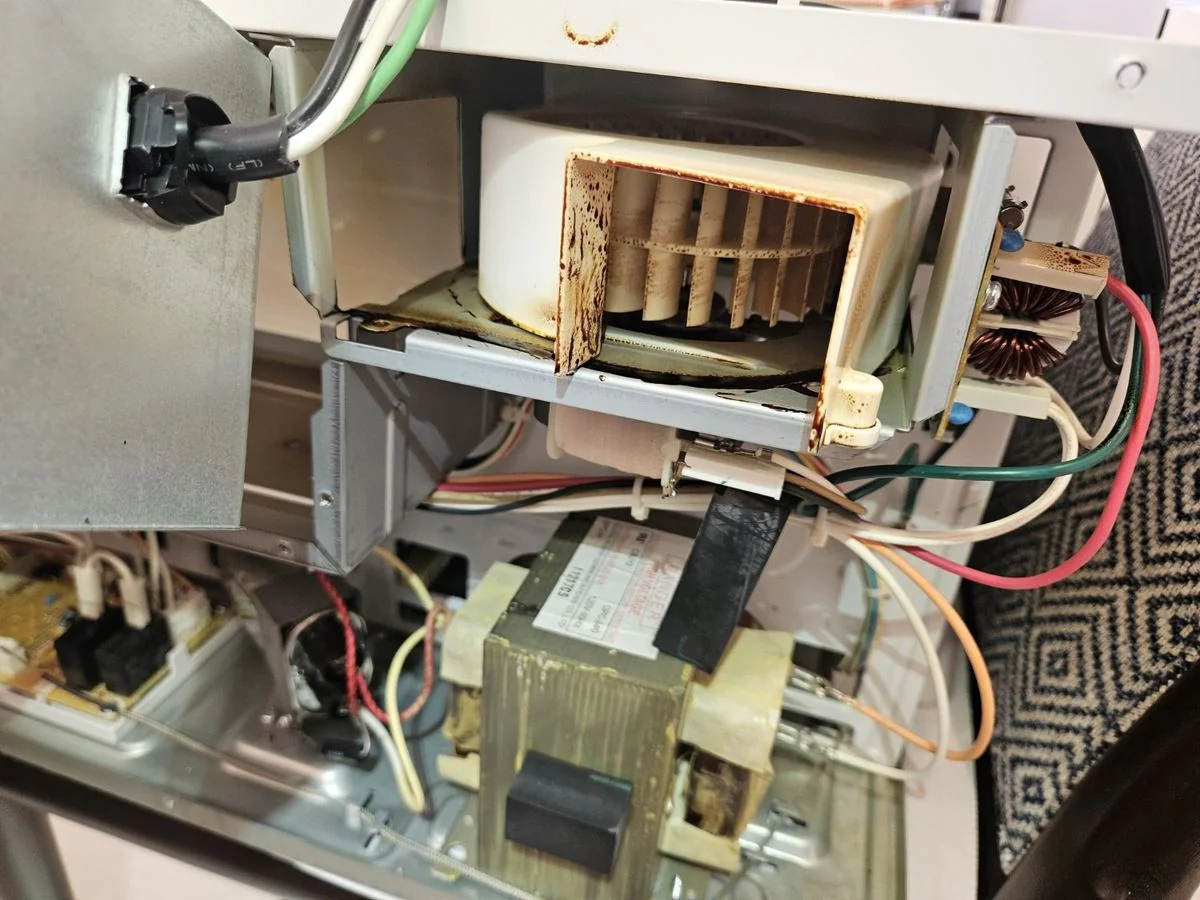
That is the view behind the panel: fan, transformer, the high-voltage side. Heat from something cooking far past its limit reaches all of it, not just the cavity walls — which is why this is worth checking even when the unit still switches on.
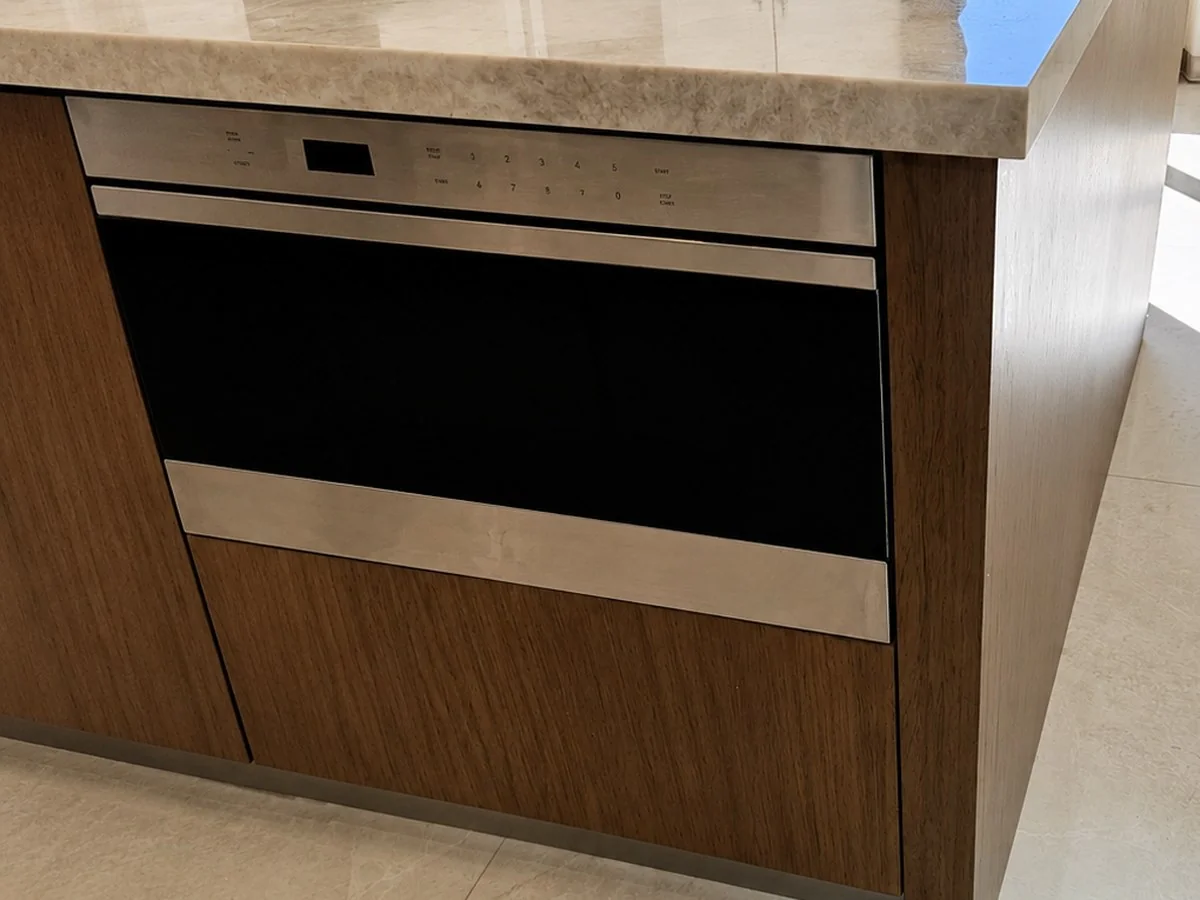
This is the most common call we get on a microwave. Light, fan and timer sit on a different circuit from the part that actually cooks, so everything looking normal tells you nothing at all until the high-voltage side is measured.
Book It
Tell us the symptom on the phone — runs but no heat, a sticking door, a code on the display — or leave your number and a dispatcher calls back with a time window.
Pricing
Nothing begins until you have approved a firm number. No hidden fees, no surprises on the invoice.
Other Appliances
Questions
Service Areas
We reach Wolf microwaves across these metro areas, with same-day appointments in most of them for calls that come in before noon.
Not on the list? Call (404) 341-4201 and we’ll tell you straight whether we reach you.