Undercounter Ice Makers
UC-15I and UC-15IO, built into islands, bars and pantries.
Sub-Zero Ice Makers
An ice maker is a small refrigerator with plumbing in it: water in, freeze, harvest, drain. An empty bin means one of those four steps stopped, and we find which one before a part is ordered.
Coverage
Undercounter units, clear-ice models, panel-ready fronts and the ice makers built into refrigerators and freezers. A model that is not on this list is still worth a call.
UC-15I and UC-15IO, built into islands, bars and pantries.
Clear-ice units, where circulation and cycle timing make the cube.
Hidden behind cabinet panels, where access is planned first.
Outdoor kitchens, with their own drain and supply troubles.
Ice makers inside fridges and freezers, dispensers included.
Installations pumping waste water uphill, where the pump fails on its own.
Units long out of warranty, where parts get sourced rather than pulled off the van.
What We Fix
Name the one that sounds like yours when you call. On an ice maker the symptom usually says whether it is water, cooling or the harvest cycle before anyone reaches your address.
Either water is not arriving or the unit is not getting cold enough to freeze it. The inlet valve, the supply line and the sealed system are the first three things we separate.
The unit believes it is working. Water goes in and the harvest never finishes — a stuck cycle, a sensor, or ice that never releases from the plate.
Fewer cubes, or cubes coming out thin and hollow. Water pressure, a filter long overdue, a tired pump, or a condenser that can no longer shed its heat.
A blocked or disconnected drain, a leaking inlet fitting, or meltwater with nowhere to go. Worth calling quickly — the cabinetry soaks it up before you ever see it.
The bin is not holding temperature, or the harvest is dumping wet ice. Door seal, bin thermostat, or a drain letting melt refreeze on itself.
An overdue filter, scale on the evaporator plate, or a cleaning cycle nobody has run in years. This one is usually a service, not a repair.
The drive mechanism or the pump. A unit that got noisy shortly before it stopped making ice is telling you exactly where to look.
Not a fault on its own, but left long enough it becomes one: restricted water starves each fill and production drops without anything breaking.
Tell us what it does and when it does it. Most of these we can name on the phone in a couple of minutes.
Recent Repairs
Real ice makers, real faults, real parts on the invoice. Every one of them started as a phone call that sounded a lot like yours.
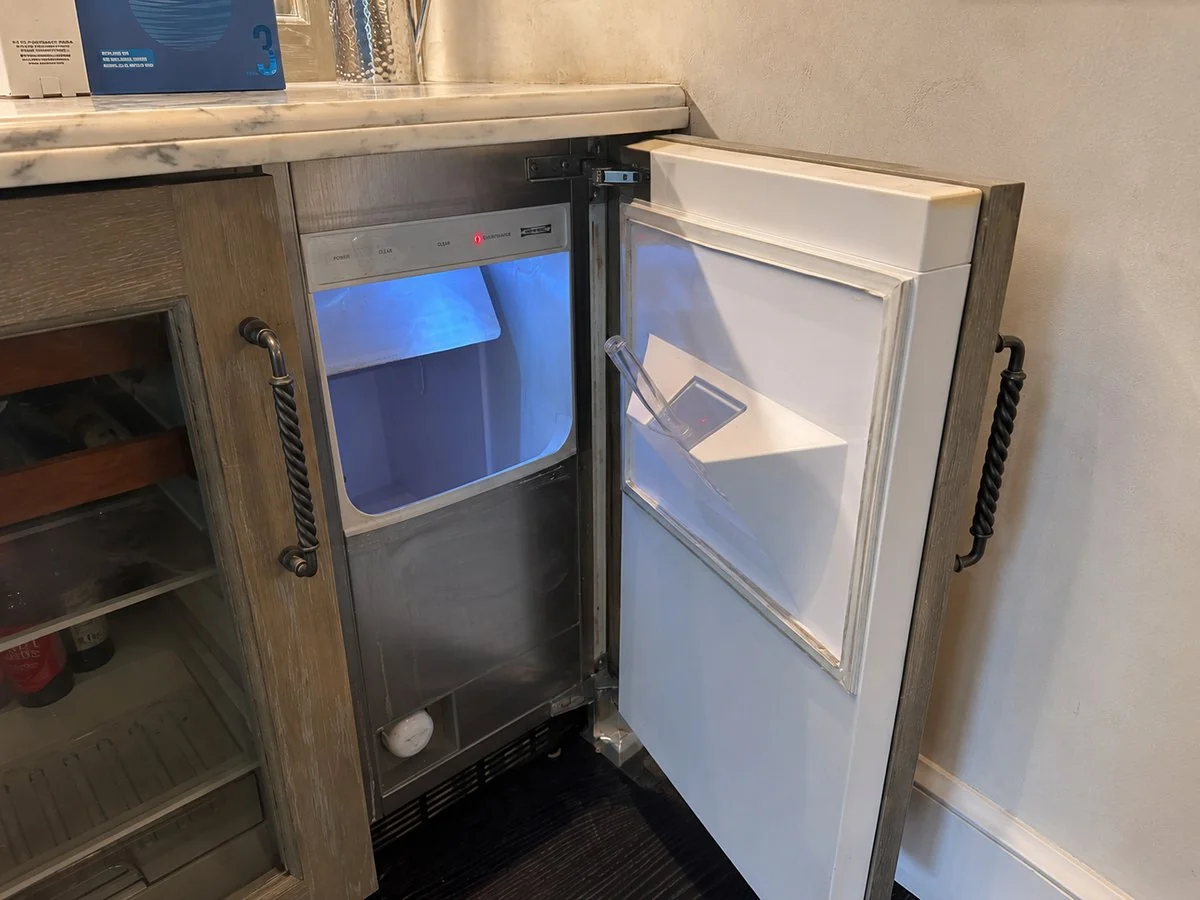
Noise before a failure is the most useful thing an ice maker can tell you. It says the fault is mechanical — motor, drive, pump — and it saves a day of chasing water and sensors that were never the problem.
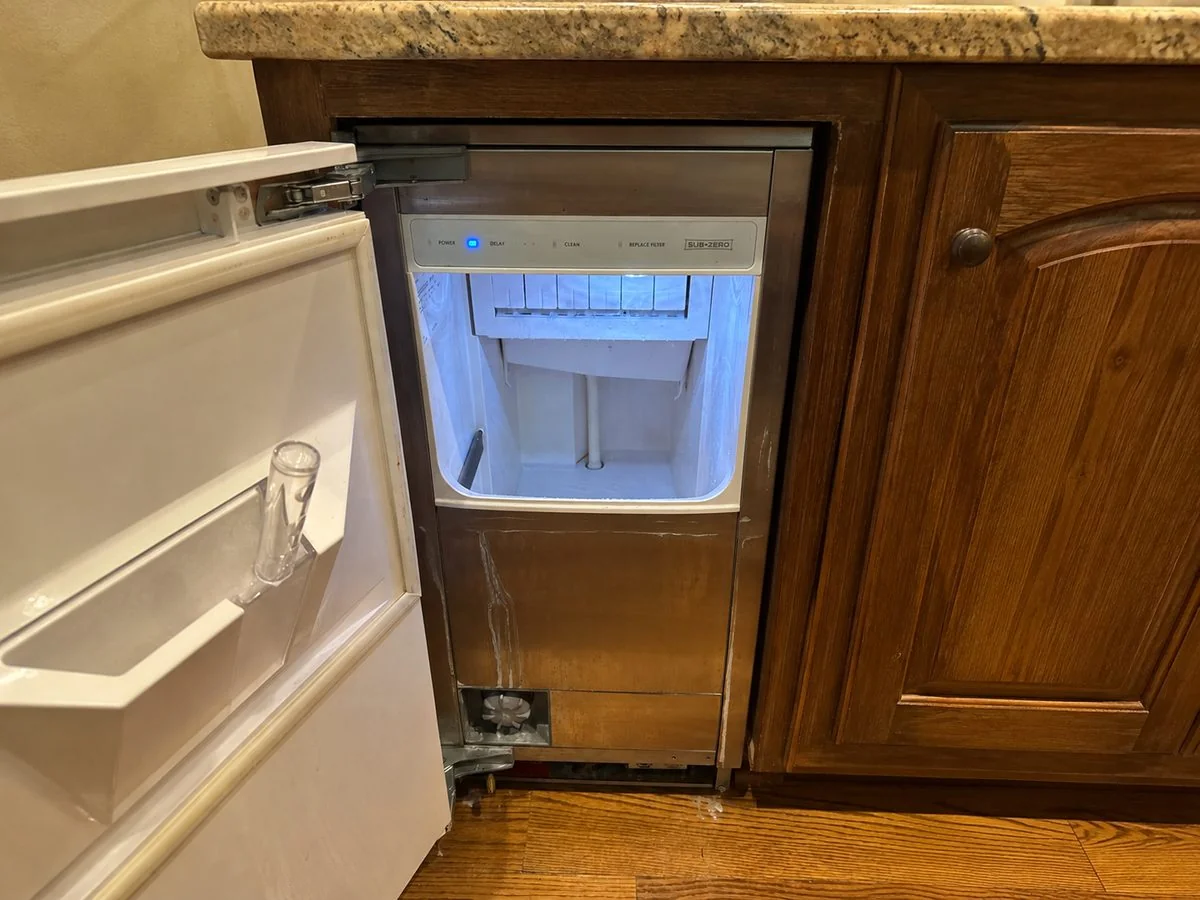
That is what an ice maker really depends on: one line in, one line out. Half the «it stopped making ice» calls we take end at one of those two hoses, not inside the appliance at all.
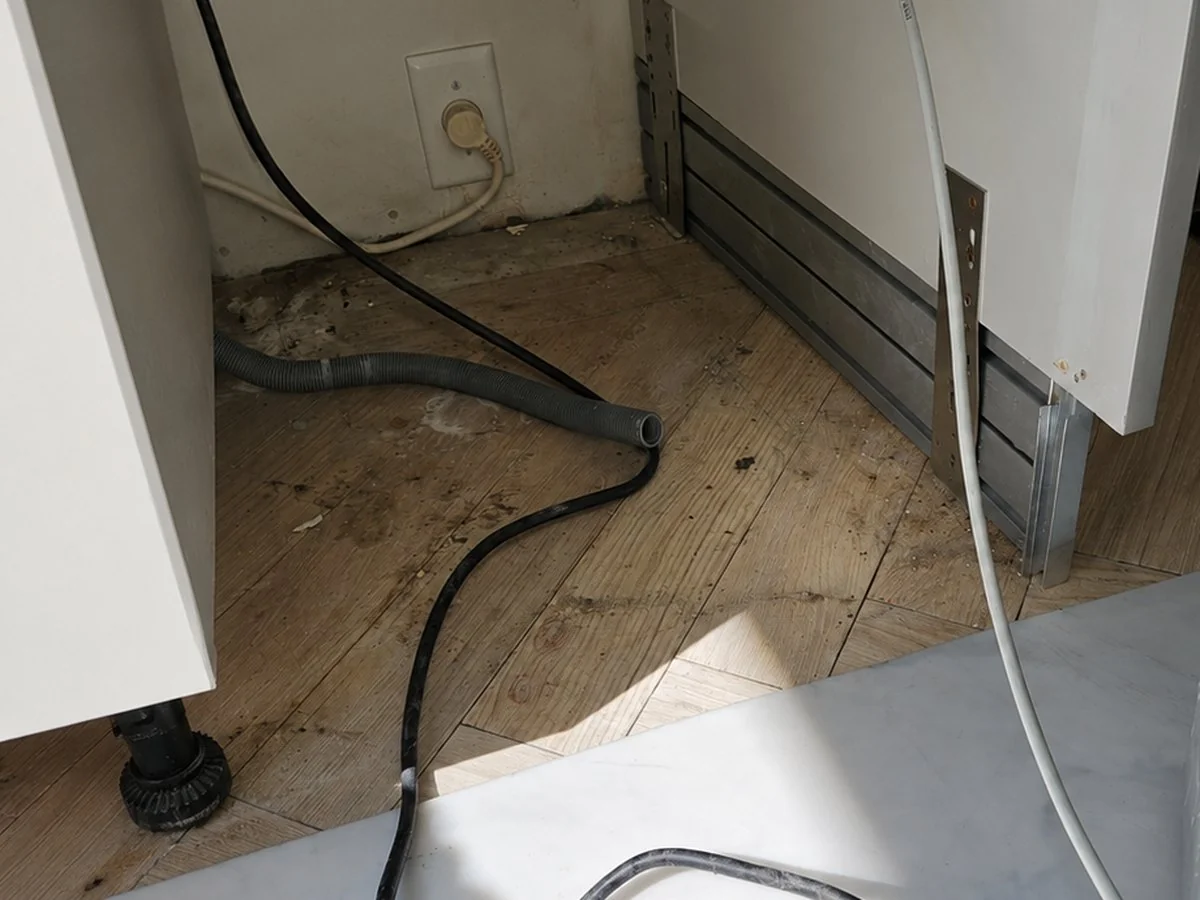
That is the finished job: a full slab of cubes on the plate, ready to harvest. A unit humming along without making ice is the harder call — nothing looks broken, so every step of the cycle has to be measured.
Book It
Tell us the symptom on the phone — no ice, half the production, water on the floor — or leave your number and a dispatcher calls back with a time window.
Pricing
Nothing begins until you have approved a firm number. No hidden fees, no surprises on the invoice.
Other Appliances
Questions
Service Areas
We reach Sub-Zero ice makers across these metro areas, with same-day appointments in most of them for calls that come in before noon.
Not on the list? Call (404) 341-4201 and we’ll tell you straight whether we reach you.