Gas Sealed-Burner
CG-series, dual-stacked sealed burners under continuous grates.
Wolf Cooktops
Gas, electric and induction are three different machines wearing the same badge, and they fail in three different ways. We work out which one you have and what it is actually doing before a single part is ordered.
Coverage
All three heat sources, framed and unframed, this year's models and units that went in fifteen years ago. A model that is not on this list is still worth a call — the fault matters more than the badge.
CG-series, dual-stacked sealed burners under continuous grates.
CT-series glass, radiant elements under a touch panel.
CI-series induction, bridge zones and boost included.
Stainless-framed drop-ins and flush-mounted glass alike.
Surfaces paired with integrated downdraft ventilation.
The same burners and ignition, with an oven below — see the range repair page.
Units long out of warranty, where parts get sourced rather than pulled off the van.
What We Fix
Name the one that sounds like yours when you call. On a cooktop the symptom usually points at two or three parts before anyone reaches your address, and that is what makes a firm quote possible over the phone.
Spark is arriving and gas is not, or the spark is jumping where it should not. Usually the valve switch, the electrode, or a cap that went back on crooked.
Nothing is confirming to the valve that a flame exists, so it closes on purpose. That is the thermocouple, or the switch behind that one knob — a safety device doing its job.
Several zones dying together is one shared component, not four failures. On induction the board or a power module; on gas, the switch cluster or the spark module.
The outlet, the connection behind the unit and the breaker are all suspects, and the cheapest ones on the list. We check the supply before anyone prices a board.
Moisture under the glass, a tired touch membrane, or the board. A panel that works cold and quits once the surface heats up points firmly at the board.
Power module, cooling fan, or a thermal sensor shutting the zone down to protect itself. A pan that was fine yesterday and is not recognised today belongs in the same group.
Blocked ports, a cap sitting off centre, or the air-to-gas mix drifted. Worth catching early: a yellow flame soots your pans and burns gas you are paying for.
The valve stem behind it is worn. Left long enough the knob turns and the valve no longer follows — that is a gas safety problem, not an annoyance.
Tell us what it does and when it does it. Most of these we can name on the phone in a couple of minutes.
Recent Repairs
Real cooktops, real faults, real parts on the invoice. Every one of them started as a phone call that sounded a lot like yours.
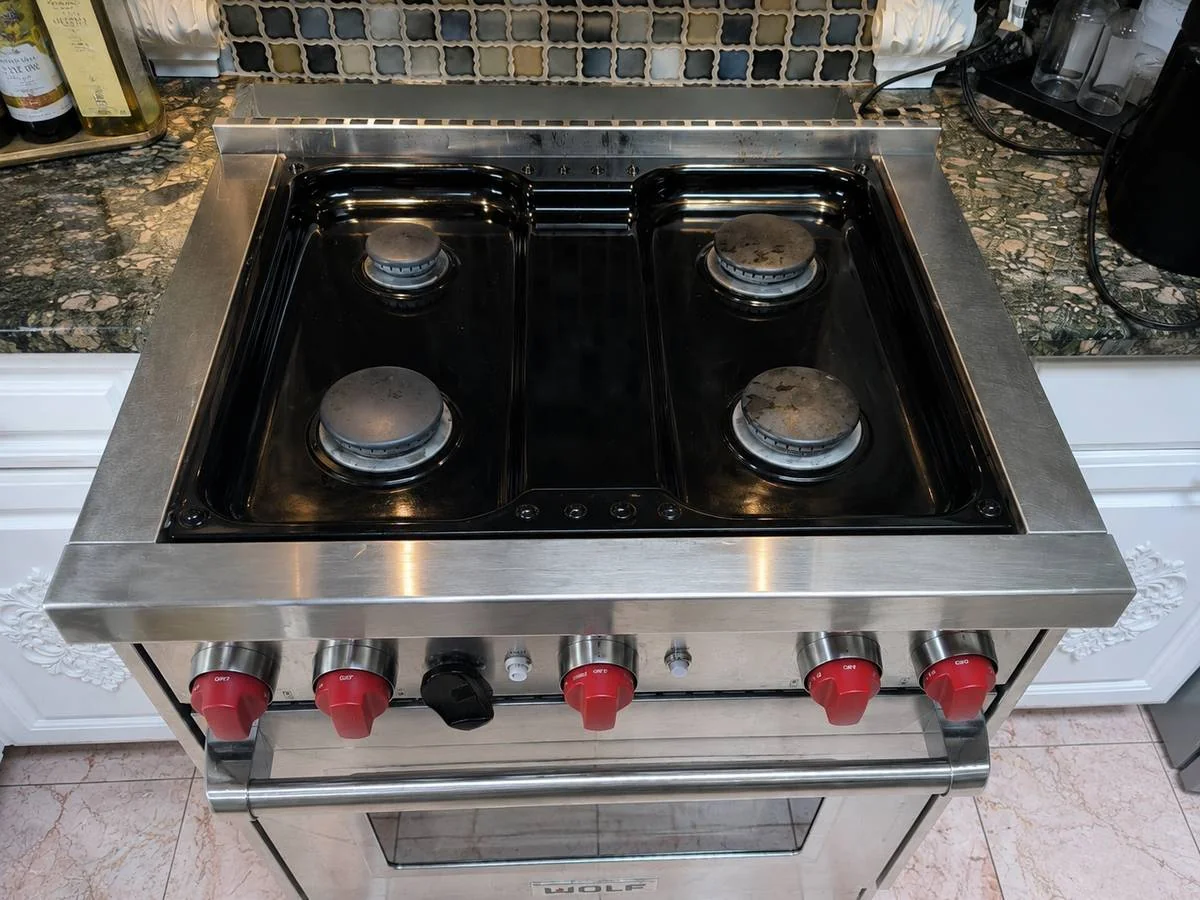
Wolf builds the same sealed burners and ignition into its cooktops, so this one reads across. Clicking without lighting, sparking now and then, or no spark at all comes down to the valve switches, the igniter or the wiring — and testing them is what stops parts going in on a guess.
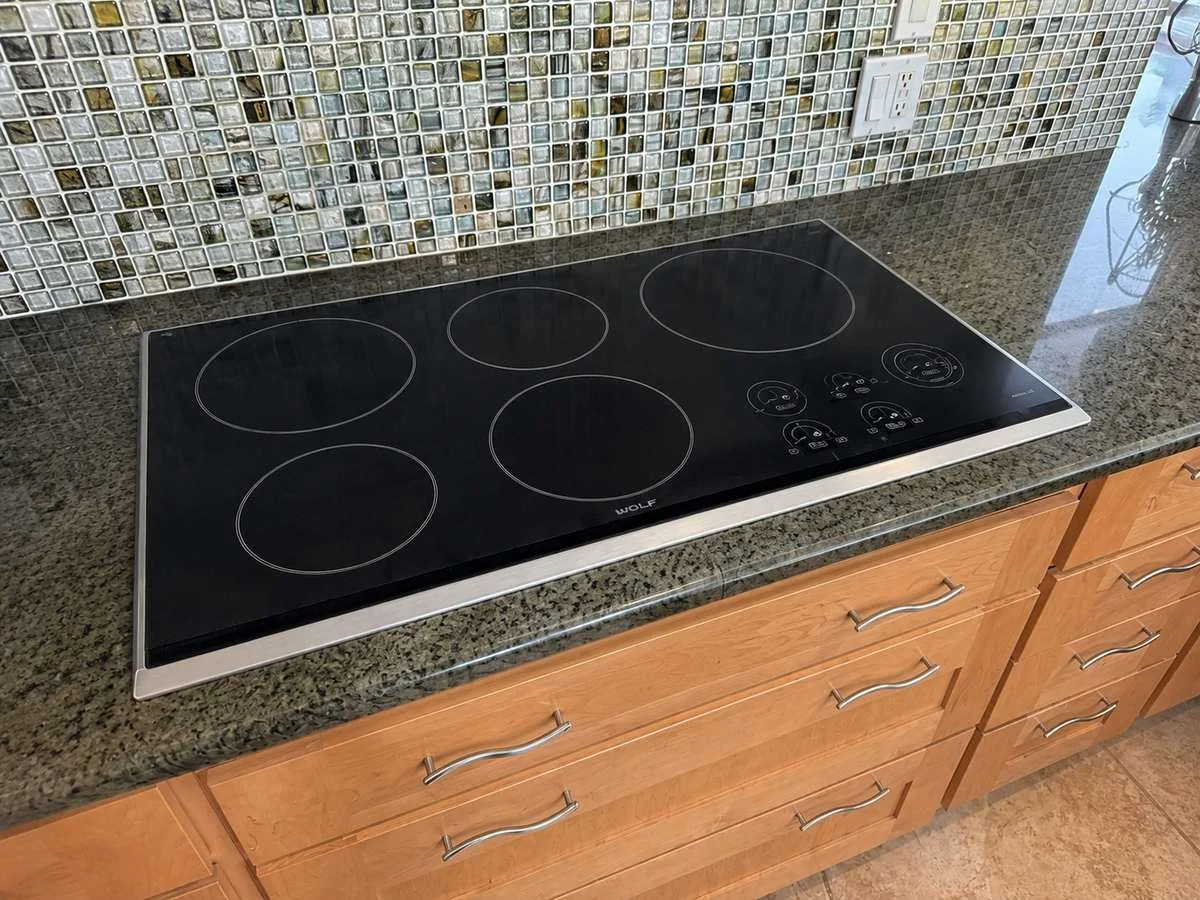
A cooktop that will not turn on is not automatically a broken cooktop. Between the breaker panel and the glass sit an outlet, a connection and a run of wire — checking those first is what kept this from becoming a control-board quote.
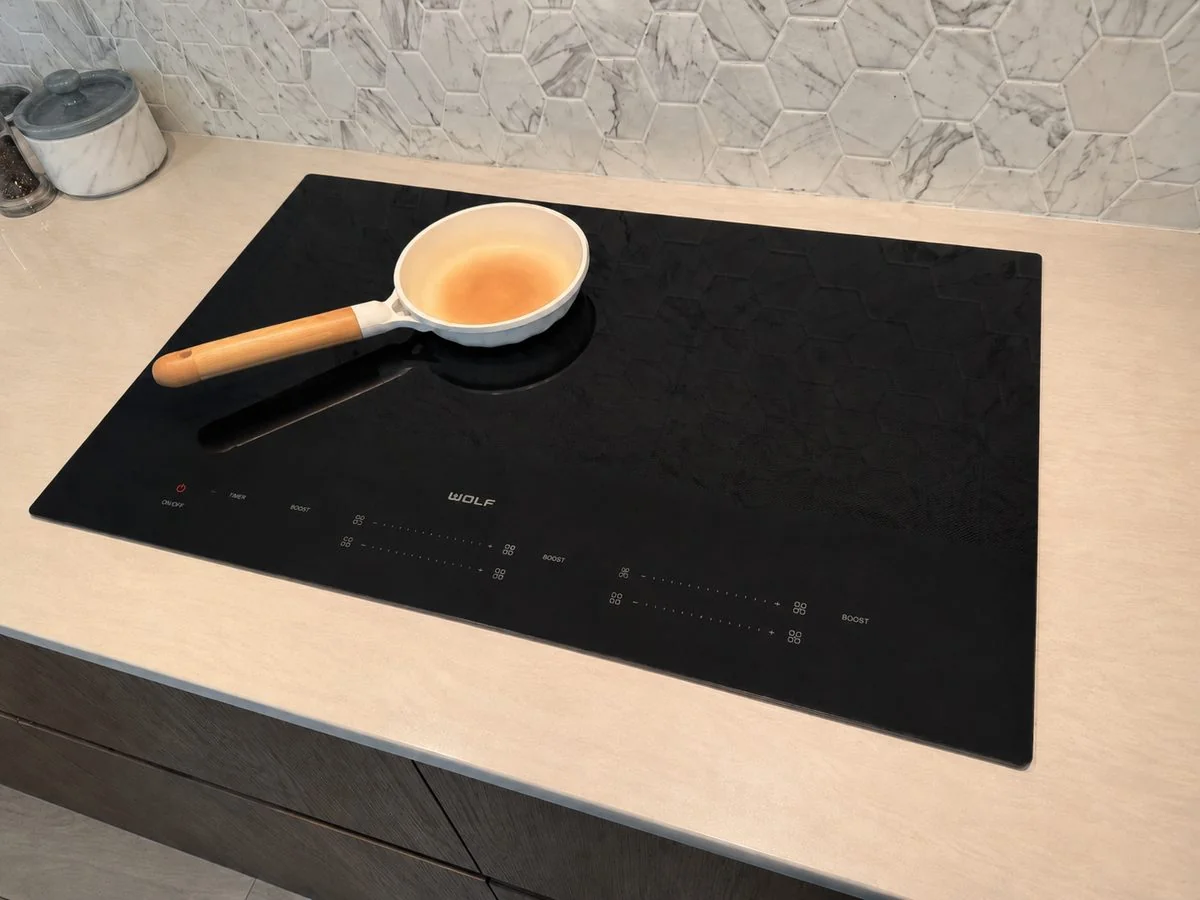
When zones die together it is almost never several faults at once. One shared component is doing it: the control board, a power module, a sensor, or the connection feeding them all.
Book It
Tell us the symptom on the phone — clicking without lighting, a dead zone, no power at all — or leave your number and a dispatcher calls back with a time window.
Pricing
Nothing begins until you have approved a firm number. No hidden fees, no surprises on the invoice.
Other Appliances
Questions
Service Areas
We reach Wolf cooktops across these metro areas, with same-day appointments in most of them for calls that come in before noon.
Not on the list? Call (404) 341-4201 and we’ll tell you straight whether we reach you.